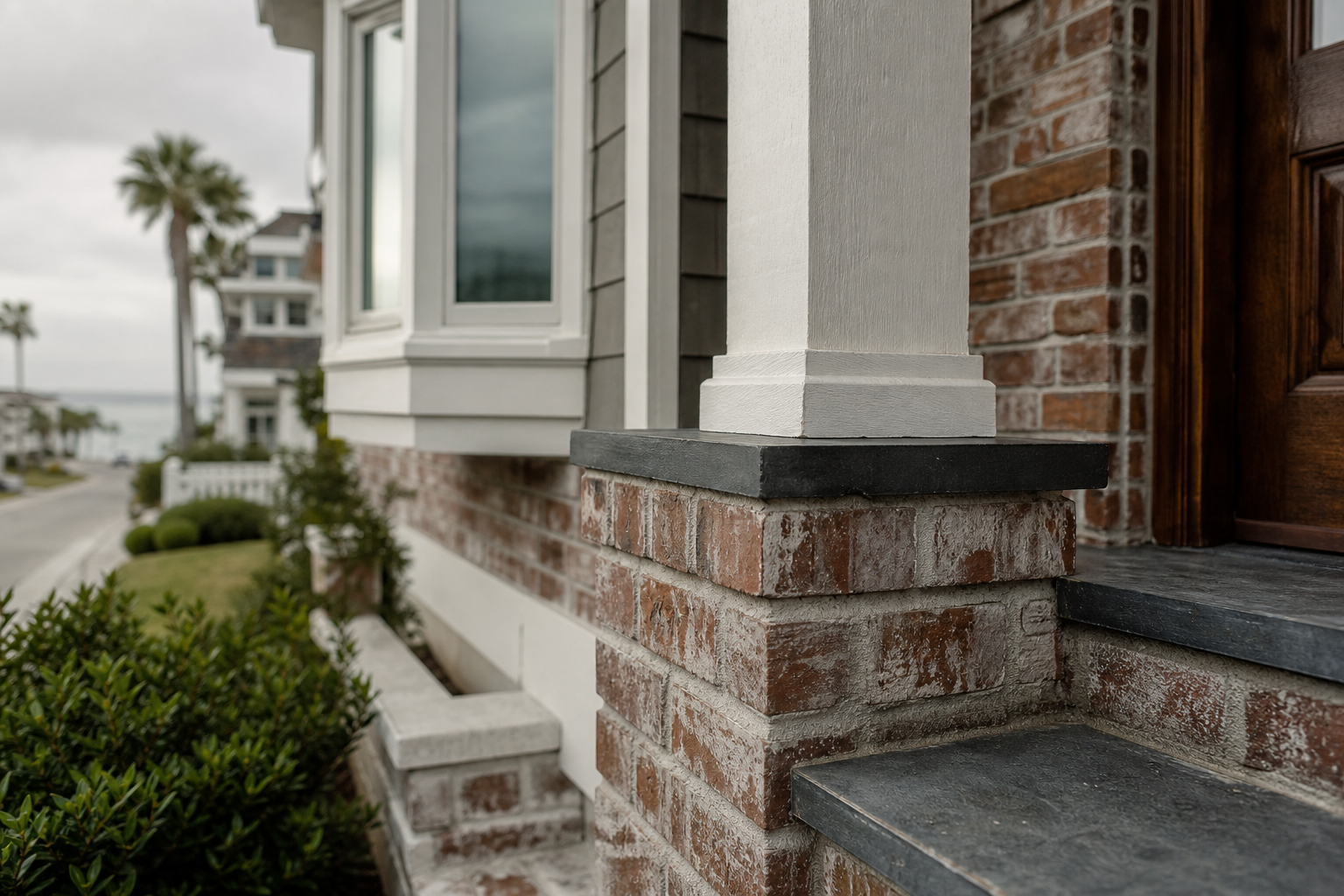
Big House vs. Simple Life in Newport Beach: The Real Annual Cost of Each

Most downsizing conversations start with feelings. As a CPA, I usually start somewhere else: what does each home actually cost you to own for 1 year? When you put a large Newport Beach house and a smaller condo or townhome side by side, line by line, the answer is often not what people expect. Sometimes the simpler home saves a lot. Sometimes, because of how California property tax works, it costs more on paper than you think. This post walks through the math so you can see your own numbers clearly.
If you are still deciding whether downsizing is even on the table, start with our 7 signs it may be time to downsize your Orange County home. For the lifestyle side of the trade, Less House, More Life covers that ground. Here we stay focused on dollars.
Why Annual Carrying Cost Is the Right Number to Compare
Purchase price gets all the attention, but it is a one-time number. Carrying cost is what you pay every year to keep the home running: property tax, insurance, utilities, upkeep, landscaping, and, in a condo or townhome, HOA dues and the occasional special assessment. Over a 10- or 15-year retirement horizon, carrying cost often matters more to your monthly budget than the price you paid.
The other half of the picture is equity. When you sell a large home and buy a smaller one, the difference becomes cash you can put to work. A complete comparison needs both: what you stop spending each year, and what the freed-up money can earn or replace.
The Big Detached Home: Where the Money Goes
Maintenance and repairs
The classic rule of thumb is to budget about 1% of a home's value each year for maintenance. In Newport Beach, I adjust that. A large share of a coastal home's value is land, and land does not need a new roof. A more realistic approach is to apply the 1% to the cost of rebuilding the structure, not the full market value. On a large, older home, that still means roofs, HVAC systems, water heaters, windows, exterior paint, and the extra wear salt air puts on metal, wood, and stucco. These costs do not arrive evenly. You may spend little for 3 years and then replace a roof and 2 HVAC units in the same year.
Homeowners insurance
A detached home needs a full policy covering the entire structure, not just the interior. Premiums for large coastal homes have been rising, and coverage has become harder to place for some properties. The California Department of Insurance residential insurance guide is a useful starting point for understanding policy types and your options if you are having trouble finding coverage.
Utilities
More square footage means more to heat, cool, light, and water. A 4,500-square-foot home with a pool and irrigated landscaping carries a very different utility bill than a 1,800-square-foot townhome where water and trash may be partly covered by the association.
Landscaping, pool, and outside services
Gardeners, pool service, tree trimming, gutter cleaning, pest control, and window washing all add up. Individually small, together they add up fast.
Property tax
This is where long-time owners have a quiet advantage. Under Proposition 13, the general tax rate is 1% of assessed value plus voter-approved bonds, and the assessed value can rise by no more than 2% per year while you own the home, according to the California State Board of Equalization. If you bought decades ago, your assessed value may be a fraction of today's market value. The Orange County Assessor's Prop 13 page explains how your base year value works. Owner-occupants can also claim the homeowners' exemption, which reduces taxable value by $7,000, per the BOE.
The Condo or Townhome: Where the Money Goes
HOA dues and what they cover
Dues are the line item that makes people hesitate, but they are not pure added cost. In most associations, dues replace several things you were paying separately: the master insurance policy on the building, exterior maintenance, roof and common-area repairs, landscaping, and contributions to the reserve fund. Depending on the community, they may also cover water, trash, a pool, a gym, or security. The right way to judge dues is to list what they cover and subtract what you would no longer pay yourself.
Your own insurance
Condo owners typically carry an HO-6 policy for interiors, personal property, and liability. Because the association's master policy covers the structure, an HO-6 policy usually costs far less than full coverage on a detached home.
Special assessments
A special assessment is a one-time charge when the association needs money its budget and reserves do not cover, such as a major roof or plumbing project. California law sets guardrails: under Civil Code Section 5605, a board generally cannot raise regular dues more than 20% over the prior year, or impose special assessments that together exceed 5% of the budgeted gross expenses for that year, without member approval. Emergencies are an exception. Those limits help, but they do not make assessments impossible, so I budget a small annual contingency for them.
Reserve studies: the document that predicts your future dues
If I could ask a buyer to read only 1 document before buying a condo, it would be the reserve study. Under Civil Code Section 5550, associations must have a visual inspection of major components at least once every 3 years and review the study every year. The study shows each major component, its remaining life, its replacement cost, and how well funded the reserves are. A well-funded association spreads big costs smoothly through dues. A poorly funded one tends to catch up through steep increases or special assessments. A low monthly dues figure attached to thin reserves is not a bargain. For the broader pros and cons of each property type, see our condo vs. single-family home downsizing guide.
Property tax on the new purchase
Here is the counterintuitive part. When you buy a condo, its assessed value generally resets to the purchase price. A long-time owner moving from a $4,200,000 house assessed at $1,100,000 into a $2,000,000 condo could see the property tax bill go up, not down. For owners 55 and older, Proposition 19 may allow you to carry your existing tax base to the new home, which can change this line dramatically; our post on who qualifies for Prop 19 and how the transfer works covers the details.
Side by Side: An Illustrative Annual Cost Comparison
Important: every number in this table is an illustrative example built to show the method, not a quote or an average for Newport Beach. Your property tax, insurance, dues, and maintenance will differ. The example assumes a long-time owner of a large detached home with a market value of $4,200,000 and an assessed value of $1,100,000, moving to a $2,000,000 townhome without transferring the old tax base. Property tax is estimated at 1.1% of assessed value to reflect the 1% base rate plus local bonds.
| Annual cost (illustrative) | Large detached home | Condo / townhome |
|---|---|---|
| Property tax | $12,100 (on $1,100,000 assessed) | $22,000 (on $2,000,000 purchase) |
| Maintenance and repairs | $18,000 (1% of $1,800,000 rebuild cost) | $4,000 (interior only) |
| Homeowners insurance | $9,000 (full structure) | $1,800 (HO-6 interior policy) |
| Utilities | $9,600 ($800 per month) | $4,200 ($350 per month) |
| Landscaping, pool, outside services | $7,800 | $0 (covered by dues) |
| HOA dues | $0 | $10,800 ($900 per month) |
| Special assessment contingency | n/a (in maintenance) | $1,500 |
| Total annual carrying cost | $56,500 | $44,300 |
In this example, the simpler home costs about $12,200 less per year to carry, even though its property tax is nearly double. Run the same example with a carried-over tax base and the gap widens considerably. Run it with a condo that has $1,500 monthly dues and an underfunded reserve, and the gap can nearly disappear. That is the point: the method matters more than any single figure.
What Freed-Up Equity Can Do
The annual savings are only part of the story. Continuing the example, a $4,200,000 sale, less an illustrative $250,000 for selling and closing costs, less the $2,000,000 townhome purchase, leaves roughly $1,950,000 before any taxes on the gain. Our breakdown of the cost to sell a home in Newport Beach shows how to estimate your own selling costs line by line.
Check the tax on the gain first
Long-time owners often have large gains. The IRS allows you to exclude up to $250,000 of gain, or $500,000 for married couples filing jointly, if you owned and lived in the home for at least 2 of the last 5 years, per IRS Publication 523. Gain above that is generally taxable at both the federal and California level, so your true net equity may be meaningfully lower. Our guide to capital gains tax on a home sale in California walks through the calculation.
Ways people put that equity to work
- Buy the smaller home with cash and eliminate a mortgage payment entirely, which can simplify a fixed-income budget.
- Fund retirement income. As an illustration only, $1,500,000 earning a hypothetical 4% would produce $60,000 per year before taxes, more than the entire carrying cost of the townhome in our example.
- Build a cushion for future healthcare, home care, or a later move closer to family.
- Help children or grandchildren with education or a first home, ideally with advice from your estate planner.
- Pay down other debt or reduce how much you draw from retirement accounts each year.
The right mix depends on your income needs, tax bracket, and estate plans, which is why this belongs in a conversation with your financial advisor and CPA, not just your Realtor.
How to Run Your Own Side-by-Side
- Pull your actual property tax bill and note your current assessed value.
- Add up 12 months of real spending on utilities, insurance, gardening, pool, and repairs. Bank and card statements are faster than memory.
- Estimate maintenance on rebuild cost, not market value, and add any big-ticket items coming due in the next 5 years.
- For each condo you consider, request the budget, reserve study, master insurance policy, and minutes from recent board meetings. Look for discussion of upcoming projects.
- Compare totals, then add the equity side: net proceeds after selling costs and taxes, and what that money could earn or replace.
If you would like a broader planning roadmap for the move itself, our Newport Beach downsizing guide for 2026 covers timing and logistics, and our post on common downsizing regrets covers the mistakes to avoid.
This article is general education, not tax, legal, or financial advice. Confirm your specific numbers with your CPA, tax advisor, or financial planner.
Frequently Asked Questions
Is a condo always cheaper to own than a house in Newport Beach?
No. A condo usually has lower maintenance, insurance, and utility costs, but HOA dues and a reset property tax bill can offset those savings. Long-time owners with a low assessed value are the most likely to see property tax rise after a move unless they qualify to transfer their existing tax base.
How much should I budget for maintenance on a large home?
A common rule of thumb is about 1% of the home's value per year. In high-land-value areas like Newport Beach, applying that 1% to the cost of rebuilding the structure gives a more realistic figure, plus extra for coastal wear and any major systems near the end of their life.
What do HOA dues usually cover?
Typically the master insurance policy, exterior and common-area maintenance, landscaping, reserve contributions, and shared amenities. Some associations also cover water, trash, or security. Always confirm with the association's budget rather than the listing description.
Can an HOA raise dues or charge a special assessment without a vote?
Within limits. Under California Civil Code Section 5605, the board generally needs member approval to raise regular dues more than 20% in a year or to impose special assessments totaling more than 5% of budgeted gross expenses, with exceptions for emergencies.
What should I look for in a reserve study?
Look at the percent funded, the list of major components with short remaining lives, and whether the funding plan relies on large future increases. Associations must update the visual inspection at least every 3 years and review the study annually.
Will I owe tax when I sell my large home to downsize?
Possibly. You may exclude up to $250,000 of gain, or $500,000 if married filing jointly, if you meet the 2-of-5-year ownership and use tests. Gain above that is generally taxable federally and in California, so estimate it before you plan how to use your proceeds.
Let's Run Your Numbers Together
Every home and every association is different, and the difference between a smart downsize and an expensive one is usually in the details. Vida and I are glad to build your actual side-by-side, your current home against the specific condos or townhomes you are considering, with real tax, dues, and reserve figures. Book a complimentary appointment or call 714-612-3870.
Dar Mardan, CPA, MBA | Vidar Group Real Estate – REAL Broker
Categories
- All Blogs (86)
- Buy home (12)
- buy home insurance (2)
- buyer agent (1)
- divorce (6)
- downsizing (24)
- estate planning (17)
- Estate Real estate (6)
- First time home buyer (7)
- home buying advice (6)
- Home buying tips (16)
- Home inspection (3)
- Home Inspections and Repairs (2)
- home insurance (1)
- home selling advice (15)
- Home Selling Tips (46)
- Home upgrades (2)
- how to sell your home (13)
- Lower home insurance cost (2)
- Lower insurance premiums (1)
- market update (4)
- Newport Center (3)
- Orange county homes (66)
- Pre Listing Preparation (7)
- probate sale (5)
- proposition 19 (4)
- Realtor tips (13)
- Rental Income (1)
- retirement planning (19)
- ROI upgrades (2)
- seller agent (1)
- Selling tips (9)
- transfer tax basis (2)
Recent Posts