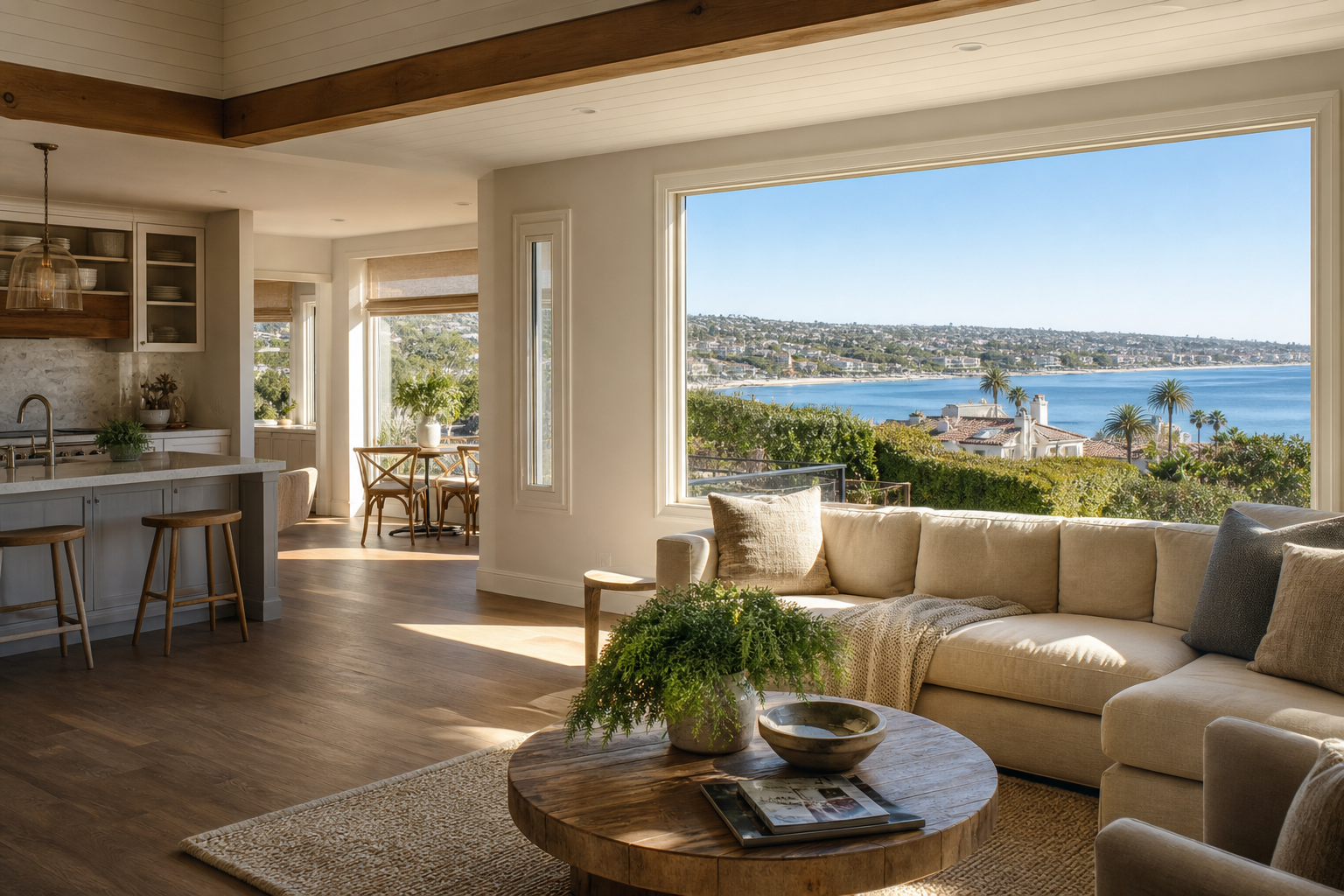
Sell Your Home for More Without Panic Upgrades: Inspect First and Fix What Matters
A homeowner once called me and said:
“Dar, my house is fully functional, but it's dated. The kitchen and bathrooms are original, but everything works. Do I really need to remodel to get a good price?”
I hear that question all the time.
And I understand why.
You look online and nearly every listing seems to have:
-
Bright white kitchens
-
New bathrooms
-
Modern flooring
-
Updated lighting
-
Perfect staging
-
Magazine-quality photography
It can make a longtime homeowner feel like an older but perfectly livable home has no chance unless they spend tens of thousands of dollars updating it first.
But that is not always true.
In fact, one of the easiest ways sellers can lose money is by making panic upgrades—rushed improvements made out of fear rather than because the numbers actually make sense.
The goal before selling isn't necessarily to transform your home into a brand-new remodeled property.
The goal is to:
Protect the home's value.
Showcase what buyers already love about it.
Reduce uncertainty.
Create buyer confidence.
And spend money only where it is likely to matter.
For many functional but dated Orange County homes, that means a different strategy:
Inspect first.
Understand the risks.
Fix what matters.
Present the home beautifully.
Price it intelligently.
Then let the home's existing strengths do the selling.
A Dated Home Is Not Necessarily a Bad Home
This distinction matters.
A home can have:
-
Original cabinets
-
Older countertops
-
Dated bathrooms
-
Traditional flooring
-
Older fixtures
and still be:
-
Structurally sound
-
Well maintained
-
Clean
-
Functional
-
Beautifully located
-
Comfortable
-
Highly desirable
Buyers understand that not every house was remodeled last year.
And many buyers would rather purchase a well-maintained older home and eventually update it according to their own taste than pay a premium for someone else's remodel.
So if your home is dated, don't immediately assume:
“We have to renovate everything.”
First ask:
What does this house already have that money can't easily recreate?
Sell the Things Buyers Cannot Remodel
A buyer can replace a countertop.
A buyer can change flooring.
A buyer can repaint cabinets.
What they cannot easily change is:
-
Ocean view
-
City view
-
Lot size
-
Location
-
Privacy
-
Cul-de-sac setting
-
Quiet street
-
School location
-
High ceilings
-
Natural light
-
Floor plan
-
Backyard orientation
-
Neighborhood
-
Proximity to the beach
-
Proximity to parks or shopping
Those are what I call the home's wow factors.
If your house has them, those are the features we need buyers to experience.
The goal is to get the buyer walking through the front door and thinking:
“I can see myself living here.”
Then we need to preserve that enthusiasm all the way through inspections and escrow.
That's where preparation becomes so important.
Buyers Often Fear Risk More Than They Fear an Older Kitchen
A dated kitchen is obvious.
The buyer can see it.
They can decide immediately whether they are comfortable with it.
What creates more anxiety is what they cannot see.
They start wondering:
How old is the roof?
Is there a leak behind that wall?
What condition is the HVAC system in?
Is the electrical panel okay?
Are there foundation problems?
The older the house appears, the easier it can be for a buyer to start imagining hidden problems.
That doesn't mean those problems exist.
But uncertainty affects buyer psychology.
So our job isn't necessarily to make the home look brand new.
Our job is to make a dated but functional home feel:
Well cared for.
Understandable.
Documented.
And less risky.
That is one reason I frequently like a pre-listing inspection.
Do the Inspection Before the Buyer Does
Many sellers wait until they are already in escrow before learning what an inspector may say about the property.
Think about the negotiating position that creates.
You list the house.
The buyer falls in love.
You negotiate an offer.
You open escrow.
Then the buyer's inspector arrives and produces a long report.
Suddenly the buyer is reading about:
-
Roof conditions
-
Plumbing issues
-
Electrical observations
-
HVAC
-
Moisture
-
Safety items
-
Deferred maintenance
-
Dozens of smaller issues
Now the buyer has the report and you have a transaction you're trying to protect.
Wouldn't it be better to understand many of those issues before the house goes on the market?
That is the purpose of a pre-listing inspection.
Not to produce a perfect house.
Not to guarantee that the buyer won't perform inspections of their own.
And certainly not to avoid your disclosure obligations.
California sellers have important disclosure responsibilities regarding known property conditions. The California Department of Real Estate's consumer guidance explains seller and agent responsibilities relating to residential property disclosures.
The purpose of inspecting early is much simpler:
Reduce surprises.
Don't Panic When You See the Inspection Report
If you've never seen a professional inspection report, it can be intimidating.
A report may contain dozens of observations.
Sometimes hundreds.
That does not mean your home suddenly needs tens of thousands of dollars in work.
Inspectors are supposed to document what they observe.
The trick is understanding which items materially affect:
-
Buyer confidence
-
Safety
-
Insurability
-
Negotiations
-
Future costs
-
The likelihood of the transaction staying together
I like to simplify the report using three categories:
GREEN: LOW PRIORITY
These may include:
-
Cosmetic issues
-
Normal wear
-
Minor maintenance
-
Small adjustments
-
Items to monitor
They may deserve attention eventually.
But they may not justify spending meaningful money before selling.
YELLOW: EVALUATE
These are issues that may be:
-
Relatively easy to correct
-
Worth repairing
-
Appropriate to document
-
Something you might address or negotiate later
The decision depends on cost and importance.
RED: DEAL RISK
These are the items that may create significant fear or renegotiation.
That is where I focus first.
The Big Five: Where I Look First
For many homes, five categories deserve particular attention because they can generate some of the strongest buyer concerns.
I call these The Big Five.
1. Roof
Don't guess about the roof.
If its age or condition is questionable, consider having an appropriate roofing professional evaluate it.
Sometimes the issue is significant.
Sometimes it is much smaller than everyone fears.
A roofing evaluation may identify items such as:
-
Broken or slipped tiles
-
Flashing problems
-
Damaged shingles
-
Minor penetrations
-
Maintenance items
-
Areas needing repair
If repairs are completed, keep the:
-
Invoice
-
Receipt
-
Contractor information
-
Warranty information, when applicable
Documentation creates confidence.
Instead of:
“The seller says the roof is fine.”
you may be able to say:
“The roof was evaluated and these repairs were completed.”
That is a very different conversation.
2. Foundation and Structural Concerns
Foundation issues frighten buyers because they often don't know what they are looking at.
They see a crack and imagine:
$100,000 problem.
But cracks and structural conditions vary enormously.
If something appears legitimately concerning, don't speculate.
Get it evaluated by the appropriate qualified professional.
That allows everyone to make decisions based on information rather than fear.
The goal isn't to hide something or argue that the buyer shouldn't care.
The goal is to understand what you're dealing with before negotiations begin.
3. Plumbing and Water
Water is one of the quickest ways to make a buyer nervous.
Why?
Because a visible leak leads to invisible questions:
What's behind the wall?
Is there mold?
How long has this been happening?
What else is leaking?
If you know about active leaks or plumbing problems, address them appropriately.
The California Department of Insurance advises homeowners not to ignore signs of water problems and to address leaks promptly because moisture can cause additional property damage. You can review its residential property claims guidance.
For some homes, another confidence-building option may be a professionally selected water-leak detection or automatic shutoff system.
These systems can monitor unusual water flow and, depending on the product, automatically shut off the water.
I would not install one simply because someone on the internet said it reduces insurance premiums.
Insurance programs vary by carrier and property.
However, some insurers do offer incentives or discounts for certain approved water-loss prevention systems. California Department of Insurance materials have documented examples of insurer discounts for leak-detection and automatic shutoff systems, and individual insurers may have their own current requirements or incentives.
So if you're considering one:
Talk to your plumber about the right system for the house and ask your own insurance company whether it affects eligibility, coverage, or premiums.
4. Electrical and Safety
Electrical issues can create both buyer concern and legitimate safety questions.
This is not an area where I recommend homeowners perform amateur repairs.
If the inspection raises concerns, have the appropriate licensed professional evaluate them.
Possible issues may involve:
-
Electrical panel concerns
-
Loose or damaged outlets
-
Missing covers
-
Improper wiring
-
Safety-related conditions
-
GFCI protection where applicable
Not every older electrical component needs to be replaced simply because it is old.
The point is to identify meaningful safety or functionality issues and address them appropriately.
Again, keep documentation.
5. HVAC
An older HVAC system doesn't automatically need replacement if it is functioning.
But don't leave the condition completely unknown.
If appropriate, have it serviced.
A service invoice can help answer basic questions:
-
Does it operate?
-
Has it been maintained?
-
Was it recently serviced?
That is often much better than telling buyers:
“It's old, but we've never had a problem.”
Documentation turns opinion into information.
After the Big Five, Fix the Little Things That Scream “Neglect”
Once the major items are understood, look at the inexpensive details.
A buyer notices:
-
Burned-out lights
-
Running toilets
-
Sticky doors
-
Loose handles
-
Slow drains
-
Broken switches
-
Missing covers
-
Windows that won't operate properly
-
Damaged trim
-
Dead landscaping
-
Dirty air vents
None of these issues alone may destroy a transaction.
But together they can create a feeling:
“This house hasn't been maintained.”
And once the buyer starts feeling that way, they often begin wondering:
“What else is wrong?”
Small repairs can have an outsized psychological impact because they communicate care.
You want buyers thinking:
“The house may be older, but these owners maintained it.”
Now Improve Presentation—Without Starting a Remodel
Once we've reduced risk, we can focus on presentation.
This is where many sellers get confused.
You do not necessarily need to remodel.
But you do need to make the existing home look as good as it reasonably can.
Start with the basics.
Deep Clean Everything
A clean home feels better maintained.
Pay attention to:
-
Kitchen
-
Bathrooms
-
Floors
-
Baseboards
-
Windows
-
Glass
-
Grout
-
Appliances
-
Fixtures
-
Doors
-
Cabinets
-
Garage
Deep cleaning may not sound exciting, but it affects how buyers perceive condition.
Declutter Aggressively
Too much furniture and too many belongings make rooms feel smaller.
Remove:
-
Excess furniture
-
Counter clutter
-
Personal collections
-
Extra décor
-
Crowded shelving
-
Garage clutter when possible
You're not trying to make the home look empty.
You're trying to let buyers see the space instead of your belongings.
Bring in More Light
Brightness matters enormously.
Look at:
-
Burned-out bulbs
-
Old low-output bulbs
-
Heavy curtains
-
Dark lampshades
-
Dirty windows
-
Outdated light fixtures
-
Dark corners
Sometimes a home that feels dated really feels dark.
Improving lighting can dramatically change photographs and showings without major construction.
Clean the Exterior
First impressions begin before the buyer reaches the front door.
Depending on the property and materials, appropriate professional exterior cleaning may improve:
-
Walkways
-
Hardscape
-
Windows
-
Exterior surfaces
-
Patio areas
Use care with pressure washing because some roofs, stucco, paint, wood, seals, and other materials can be damaged by inappropriate pressure or cleaning methods.
The goal is not:
“Pressure wash absolutely everything.”
The goal is:
Make the exterior look cared for using the right cleaning method for each surface.
Improve the Landscaping
You don't necessarily need a new landscape design.
Often you need:
-
Trimming
-
Weeding
-
Removal of dead plants
-
Fresh mulch
-
Clean walkways
-
Healthy-looking grass or ground cover
-
Clean entry area
Buyers begin forming an opinion before the front door opens.
Make Existing Floors Look Their Best
If you have:
-
Hardwood
-
Stone
-
Tile
professional cleaning or appropriate restoration may be far less expensive than replacement.
Again, don't automatically replace things that are already good.
Show buyers the best version of what the house currently has.
Be Careful Painting Older Cabinets
This deserves special mention.
Sellers see beautiful painted cabinets online and think:
“We'll paint ours white.”
Sometimes that works.
Sometimes it creates a problem.
Certain older cabinet finishes, materials, doors, coatings, and preparation requirements can make rushed painting look poor or fail prematurely.
You may end up with:
-
Chipping
-
Peeling
-
Brush marks
-
Poor adhesion
-
An obviously inexpensive cosmetic cover-up
A functional older cabinet can sometimes look better than a poorly refinished one.
Before painting cabinetry, talk with someone who understands the existing material and proper preparation.
Don't do it simply because white kitchens are popular.
What About Small Cosmetic Upgrades?
Selective improvements can make sense.
Examples might include:
-
Light fixtures
-
Faucet
-
Hardware
-
Door hardware
-
Mirrors
-
Selected plumbing fixtures
-
Simple landscaping improvements
But I prefer small upgrades when they create a disproportionate visual improvement for relatively little cost.
Think:
Maximum presentation improvement per dollar.
Not:
“Let's update everything.”
Now Let's Talk About Pricing
You can prepare the home beautifully and still lose if the pricing strategy is wrong.
If your property is dated, you generally need to recognize that buyers will compare it with remodeled alternatives.
That doesn't necessarily mean giving the house away.
It means understanding the relationship between:
Price + condition + location + competition.
Your home may have the better:
-
Lot
-
View
-
Floor plan
-
Street
-
Privacy
-
Location
while another property has the newer kitchen.
Buyers will decide how much those differences are worth.
That's where pricing becomes extremely important.
Pricing Should Create Interest, Not Defend Your Ego
I sometimes describe pricing as the invitation.
The price is what encourages a qualified buyer to stop scrolling and look more closely.
Our goal is to create traffic from the right buyers.
Because buyers cannot fall in love with a home they never see.
More qualified traffic can create:
More interest.
More urgency.
More competition.
More negotiating leverage.
But this does not mean every seller should dramatically underprice their property.
The correct strategy depends on:
-
Comparable sales
-
Current listings
-
Property condition
-
Location
-
Market momentum
-
Seller objectives
The larger principle is:
Don't price a dated home as though buyers won't notice the difference between dated and remodeled.
Give them a reason to walk through the door.
Then let the home's strengths do the rest.
The Buyer Makes Two Decisions
I often think of home buying as involving two different decisions.
Decision #1: Emotional
The buyer walks in and thinks:
“I love this.”
That's driven by:
-
Location
-
Floor plan
-
Light
-
View
-
Yard
-
Neighborhood
-
Presentation
-
Feeling
Decision #2: Logical
Once the buyer loves the home, they begin justifying the purchase.
That's where they ask:
-
Is the roof okay?
-
Is the HVAC working?
-
Are there leaks?
-
What will I have to fix?
-
Is this property well maintained?
-
What did the inspection show?
Your strategy needs to support both decisions.
Presentation helps create the emotional decision.
Inspection preparation and documentation help protect the logical decision.
Pre-Listing Inspection vs. Panic Remodeling
Here's how I would compare the two approaches.
| Panic Remodeling | Inspection-First Strategy |
|---|---|
| Starts with appearance | Starts with information |
| May involve large upfront expense | Identifies actual areas of concern |
| Often based on guessing buyer taste | Focuses on buyer risk and marketability |
| Can over-improve the property | Prioritizes repairs by importance |
| May not return the investment | Helps control unnecessary spending |
| Can delay listing | Often allows a more targeted preparation plan |
| Focuses heavily on finishes | Balances condition and presentation |
This is not an argument against remodeling.
Some homes absolutely benefit from meaningful updates.
It is an argument against remodeling without first understanding why you're spending the money.
The Preparation Priority List
If you own a functional but dated home, this is roughly how I would approach it:
Priority 1: Understand major risk
-
Inspection
-
Roof
-
Foundation/structure
-
Plumbing/water
-
Electrical
-
HVAC
Priority 2: Fix inexpensive signs of neglect
-
Doors
-
Fixtures
-
Toilets
-
Lights
-
Drains
-
Hardware
-
Minor visible damage
Priority 3: Clean and declutter
Make the house feel cared for.
Priority 4: Increase brightness
Lighting and windows.
Priority 5: Improve curb appeal
Give buyers a strong first impression.
Priority 6: Consider selective cosmetic changes
Only where the return appears worthwhile.
Priority 7: Price according to condition
Don't pretend the home is something it isn't.
Priority 8: Market the wow factors
Give buyers a reason to choose your property.
What Should You Not Fix?
This is just as important as what you should fix.
You may not need to replace:
-
A functional kitchen because it is dated
-
A functional bathroom because the tile is older
-
Flooring simply because it isn't the latest style
-
Cabinets simply because they aren't white
-
Every cosmetic item in the inspection report
Our guide to what not to fix before selling your home so you don't lose money goes deeper into this question.
The objective is to maximize net proceeds, not brag about how much money you spent before the sale.
Frequently Asked Questions
Should I remodel my outdated kitchen before selling?
Not automatically.
If the kitchen is functional but dated, first compare:
-
Cost of remodeling
-
Expected effect on market value
-
Time required
-
Buyer expectations in your neighborhood
-
Current competition
A less expensive preparation strategy may produce a better net result.
Is a pre-listing inspection worth it?
For many homes, especially older properties, it can be valuable because it helps identify significant issues before a buyer's inspection creates pressure during escrow.
However, it does not guarantee the buyer's inspector will reach the same conclusions and does not replace applicable California disclosure obligations.
Should I fix everything in the inspection report?
Usually, no.
Inspection reports can contain many maintenance and cosmetic observations.
Focus first on issues that materially affect:
-
Safety
-
Function
-
Buyer confidence
-
Insurability
-
Major future expense
-
Negotiating leverage
Then evaluate the smaller items based on cost.
What are the biggest inspection problems when selling a home?
Every property is different, but I frequently focus on:
-
Roof
-
Foundation/structure
-
Plumbing and water
-
Electrical
-
HVAC
Those categories can have significant financial and psychological impact on buyers.
Should I replace an old HVAC system before selling?
Not automatically.
If it operates properly, servicing and documenting its condition may be more appropriate than replacing it simply because of age.
If inspection reveals significant problems, then evaluate replacement or repair based on the circumstances.
Does a leak-detection system increase home value?
I would not promise that it increases market value by a specific amount.
Its primary benefit is risk reduction and buyer confidence.
Some insurers may also offer discounts or incentives for qualifying systems, but policies vary. Ask the homeowner's own insurance company.
Will a water shutoff device reduce my homeowners insurance?
Possibly, depending on the insurance company, property, device, and current underwriting rules.
Some insurers have offered incentives for approved leak-detection or automatic shutoff devices, but there is no universal discount.
Check directly with your insurer before buying a system for that reason.
Should I paint my kitchen cabinets before selling?
Only if the existing cabinets are good candidates for refinishing and the work can be done professionally.
Poorly prepared painted cabinets can peel, chip, or look worse than the original finish.
Is deep cleaning really important when selling?
Yes.
Cleaning affects buyer perception of how well the home has been maintained.
Even though cleaning does not change square footage or location, it can materially improve presentation.
Is it better to sell a dated home as-is?
Sometimes.
“As-is” can be an effective strategy when:
-
Renovation costs are high
-
The estate or seller doesn't want to manage work
-
The property needs substantial repairs
-
The likely return doesn't justify improvements
But don't automatically assume an investor or as-is price produces the best net result.
Compare the alternatives.
How should I price a dated home?
Based on current comparable sales, active competition, location, property condition, features, and buyer alternatives.
A dated property generally shouldn't be priced as though it were fully remodeled unless its other characteristics justify the difference.
The Bottom Line
If your home is older but functional, don't panic.
You may not need:
A new kitchen.
New bathrooms.
New floors.
$100,000 in renovations.
You need a plan.
Start by understanding the house.
Inspect it.
Identify the major risks.
Focus on the Big Five:
Roof.
Foundation and structure.
Plumbing and water.
Electrical.
HVAC.
Address the meaningful issues.
Fix the small items that make the property look neglected.
Deep clean.
Declutter.
Brighten the home.
Improve curb appeal.
Protect the features buyers already love.
Then price the property according to what it actually is.
A dated house does not need to pretend to be a remodeled house.
It needs to communicate something different:
This house has great bones.
It has features you can't recreate.
It has been cared for.
You understand what you're buying.
And you can make it your own.
That's a powerful selling story.
And in many cases, it may protect your money better than a rushed renovation ever could.
We Pay to Help Prepare Your Home
At Vidar Group Real Estate, we believe preparing the property properly is part of the selling strategy—not something homeowners should have to figure out alone.
Depending on the property and listing arrangement, our preparation and marketing approach may include coordinating services such as:
-
Pre-listing home inspection
-
Termite inspection
-
Contractor coordination
-
Deep cleaning
-
Decluttering
-
Property preparation
-
Staging design
-
Professional photography
-
Video
-
Customized property website
-
Social-media marketing
The exact services and terms should always be discussed and agreed upon for the particular listing.
Our broader guide, Selling Your Home Isn't One Step—It's Three, explains how property preparation, marketing, and successfully navigating escrow all need to work together.
If you're wondering whether your home needs a remodel—or simply the right preparation plan—schedule a complimentary appointment with Dar Mardan and Vidar Group Real Estate.
Before you spend money, let's determine what is actually worth fixing.
About Dar Mardan
Dar Mardan leads Vidar Group Real Estate, helping Orange County homeowners prepare, position, market, and sell their homes with a focus on protecting value and avoiding unnecessary expenses.
Whether a home is dated, needs repairs, requires contractor coordination, or simply needs the right presentation before going on the market, Dar and the team take a hands-on approach to evaluating the property and developing a practical selling strategy.
Working alongside Vida's design and presentation expertise, the team helps homeowners determine what should be improved, what should be left alone, and how to make the property's strongest features stand out to buyers.
Vidar Group Real Estate
Real Broker
Dar Mardan, REALTOR® | DRE #02121982
714-612-3870
dar@vidargroupre.com
Equal Housing Opportunity. Dar Mardan is a licensed Realtor regulated by the California Department of Real Estate. This article is provided for general informational purposes only and is not legal, inspection, engineering, construction, insurance, tax, or financial advice. Property conditions, repair needs, disclosure obligations, insurance requirements, contractor recommendations, and market conditions vary. Consult the appropriate licensed inspector, contractor, engineer, plumber, electrician, roofer, HVAC professional, insurance professional, attorney, or other qualified specialist regarding your specific property.
Categories
- All Blogs (63)
- Buy home (12)
- buy home insurance (2)
- buyer agent (1)
- divorce (5)
- downsizing (17)
- estate planning (12)
- Estate Real estate (6)
- First time home buyer (5)
- home buying advice (6)
- Home buying tips (8)
- Home inspection (3)
- Home Inspections and Repairs (2)
- home insurance (1)
- home selling advice (15)
- Home Selling Tips (34)
- Home upgrades (2)
- how to sell your home (13)
- Lower home insurance cost (2)
- Lower insurance premiums (1)
- market update (3)
- Newport Center (1)
- Orange county homes (46)
- Pre Listing Preparation (7)
- probate sale (4)
- proposition 19 (4)
- Realtor tips (13)
- Rental Income (1)
- retirement planning (10)
- ROI upgrades (2)
- seller agent (1)
- Selling tips (9)
- transfer tax basis (2)
Recent Posts