
The Probate vs. Trust - Inherited Home Mistake That Gets Families Stuck in Court, California
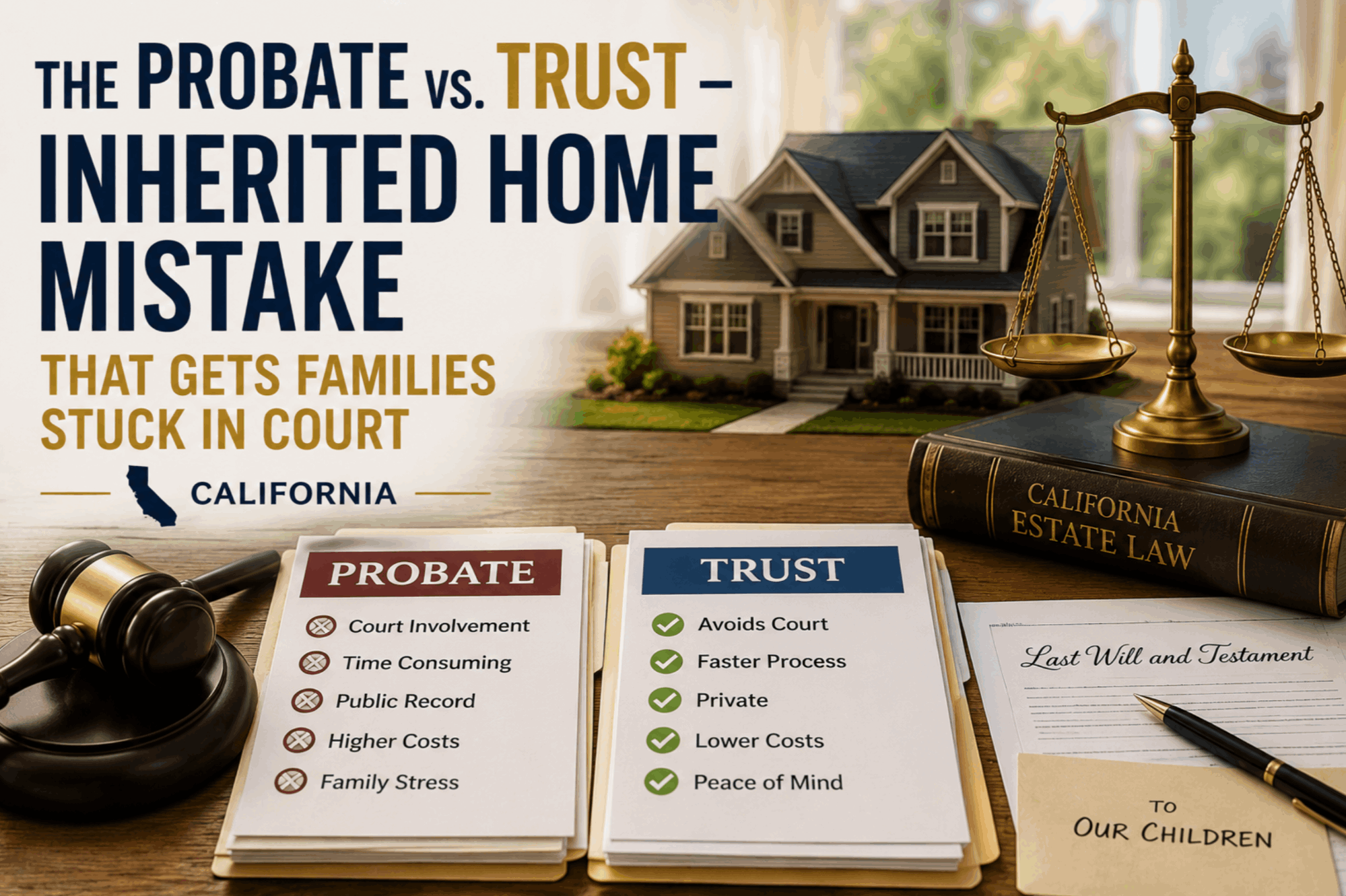
If something happens to your parents, or your spouse, tomorrow, could your family sell the home quickly, or would the house get stuck in probate court for months, maybe even years. Most families do not realize how fast life can change, and how one missing detail can create a legal and financial mess around the biggest asset in the family, the home.
A Real Scenario, We Need to Sell the House, Why Can’t We
A family called me because they needed to sell a home quickly. There were urgent reasons, expenses, bills, carrying costs, and the reality that the estate needed liquidity. The home was the biggest asset, and selling it felt like the obvious solution. But here is what they did not expect, even though everyone agreed the home should be sold, they were stuck.
Not because the market was slow, not because the home needed repairs, and not because buyers were not interested. They were stuck because of the title. The home was only in one spouse’s name. And when that spouse passed away, the family learned a hard truth, in many cases, you cannot sell quickly, you may need court authorization, and you can end up in a probate or court supervised process that can drag on for months, sometimes longer.
That is why I call this a BIG, HUGE RED FLAG. If you are married and your home is titled in only one spouse’s name, you should consult an estate attorney. It is not a small detail, it can become a major legal bottleneck at the exact moment your family needs clarity and speed.
The Three Risks Every Family Should Understand, California
When a home is inherited in California, families usually face three major risks.
1- Legal and probate court, or an established family trust. If there is no proper estate plan in place, or the home is not titled correctly, the estate may be forced into probate. Probate is a court process that determines who has authority to act, how assets are handled, and whether the home can be sold. Here is the problem, in many situations, you cannot just sell the home immediately. The court may need to appoint the person who can sign. Paperwork must be filed. Hearings may be scheduled. Steps take time. Meanwhile real life continues, mortgage payments, property taxes, insurance, utilities, maintenance. Delays become expensive, stressful, and unnecessary. An established family trust can often avoid many of these probate delays for that home, but only if it is done correctly.
2- The plan, is the house actually placed in the trust. This is where families get surprised. People tell me, we have a trust. But when we check, the house was never actually titled into the trust. That is a common mistake, and it matters. A trust on paper does not help much if the home is not properly transferred into the trust and recorded correctly. If it is not, families can still end up in probate. This is why I tell people, you should have a family trust regardless of age. Life throws curveballs. And if you have young children, you especially owe it to your family to have your plan in place.
3- Tax, step up in basis, and why families overpay. Now let us talk about the tax side, because this is where families can accidentally pay far more than they should. There is a concept called step up in basis. In plain English, when someone passes away, the home’s starting value for tax purposes is typically reset to the fair market value on the date of death. That can dramatically reduce capital gains tax when the home is sold. Example, parents bought the home for 200,000. On the date of death, the home is worth 1,200,000. The basis often becomes closer to 1,200,000, with proper documentation. So when the home sells, the taxable gain can be much smaller than people fear. But that depends on doing it correctly.
California Note, Community Property Can Mean a Full Step Up
California is a community property state, and that can be a major advantage. In many situations, if a home is truly community property and one spouse passes away, the basis may be adjusted more favorably than people assume. This is why title matters so much. If the home is not correctly titled and characterized, families can lose time in court, and potentially lose tax benefits they could have had. This is also why the one spouse on title issue is such a big red flag. Talk to an estate attorney and CPA about how the property is titled and characterized, community property versus separate property can make a huge difference.
Who Files the Tax Return When an Inherited Home Is Sold
This is one of the most common questions families ask. The answer depends on one thing, who actually sold the home.
Scenario A - the heirs sold the home. If the home was transferred to the heirs and then sold, the sale is usually reported on the heirs’ personal tax return. It often shows up on Form 8949, and Schedule D. The step up does not show up as a label, it shows up as the basis number used in the gain calculation.
Scenario B- the estate or trust sold the home. If the home was sold by the estate or the trust, then the estate or trust may file Form 1041, and beneficiaries may receive a K 1. A practical tip, look at the closing documents and see who the seller is, Estate of is one path, trust name is another, your personal name usually means heirs sold and report it personally.
How to Document the Value, Appraisal, or Broker Statement of Value
To use step up in basis properly, you need support for the fair market value on the date of death. People assume they always need an appraisal. An appraisal is the strongest support, especially if the IRS ever asks questions. But in many cases, a qualified broker statement of value, with strong documentation, can also support fair market value, recent comparable sales, adjustments, photos, written explanation. The key is simple, do not guess, do not rely on a random online estimate, document it properly.
The Simple Checklist, Protect Your Family Before There Is a Crisis
If you want the simplest plan possible, here it is,
1- Talk to an estate attorney about a proper estate plan and trust structure
2- Make sure the home is properly titled into the trust
3- Name the trustee and backup trustee clearly
4- List the beneficiaries clearly
5- Have a plan for valuation and documentation, date of death value, records, closing statement
6- Confirm title and characterization, especially community property, is correct
This is not about being dramatic. It is about protecting your family from court delays, stress, and unnecessary tax bills.
Final Thought
The biggest mistakes happen when families assume, guess, or delay. A simple plan, done correctly, can turn a complex situation into something manageable. And it can protect the people who matter most. If you would like, download and print the blog, take notes, and use it as a checklist when you talk to your estate attorney or your CPA.
Frequently Asked Questions
What is the difference between probate and a trust when a home is inherited?
Probate is a court-supervised process to transfer a person's property after death. In California it can take many months and involves statutory fees. A home held in a properly funded living trust can usually be managed and sold by the successor trustee without going through probate.
Can an inherited home be sold while probate is still open?
Yes. Depending on the authority granted to the executor or administrator, the sale may proceed with limited court involvement or may require court confirmation, which adds time and an overbid process.
Will we owe capital gains tax if we sell the inherited home?
Inherited property generally receives a step-up in basis to its fair market value at the date of death. If the home sells for close to that value, the taxable gain may be small. In California, community property can receive a full step-up when the first spouse dies.
Who files the tax return when an inherited home is sold?
If the estate or trust sells the property, the sale is generally reported on Form 1041. If the home is first distributed to the heirs and they sell it, the heirs report the sale on their own returns.
How should we document the home's value at the date of death?
A written appraisal from a licensed appraiser as of the date of death is the strongest support. A broker opinion of value can help with planning, but an appraisal is the better record for tax purposes.
References
- IRS Publication 551, Basis of Assets
- IRS Publication 559, Survivors, Executors, and Administrators
- IRS, About Form 1041, U.S. Income Tax Return for Estates and Trusts
This information is general and not legal or tax advice. Work with your estate attorney and CPA.
Categories
- All Blogs (63)
- Buy home (12)
- buy home insurance (2)
- buyer agent (1)
- divorce (5)
- downsizing (17)
- estate planning (12)
- Estate Real estate (6)
- First time home buyer (5)
- home buying advice (6)
- Home buying tips (8)
- Home inspection (3)
- Home Inspections and Repairs (2)
- home insurance (1)
- home selling advice (15)
- Home Selling Tips (34)
- Home upgrades (2)
- how to sell your home (13)
- Lower home insurance cost (2)
- Lower insurance premiums (1)
- market update (3)
- Newport Center (1)
- Orange county homes (46)
- Pre Listing Preparation (7)
- probate sale (4)
- proposition 19 (4)
- Realtor tips (13)
- Rental Income (1)
- retirement planning (10)
- ROI upgrades (2)
- seller agent (1)
- Selling tips (9)
- transfer tax basis (2)
Recent Posts